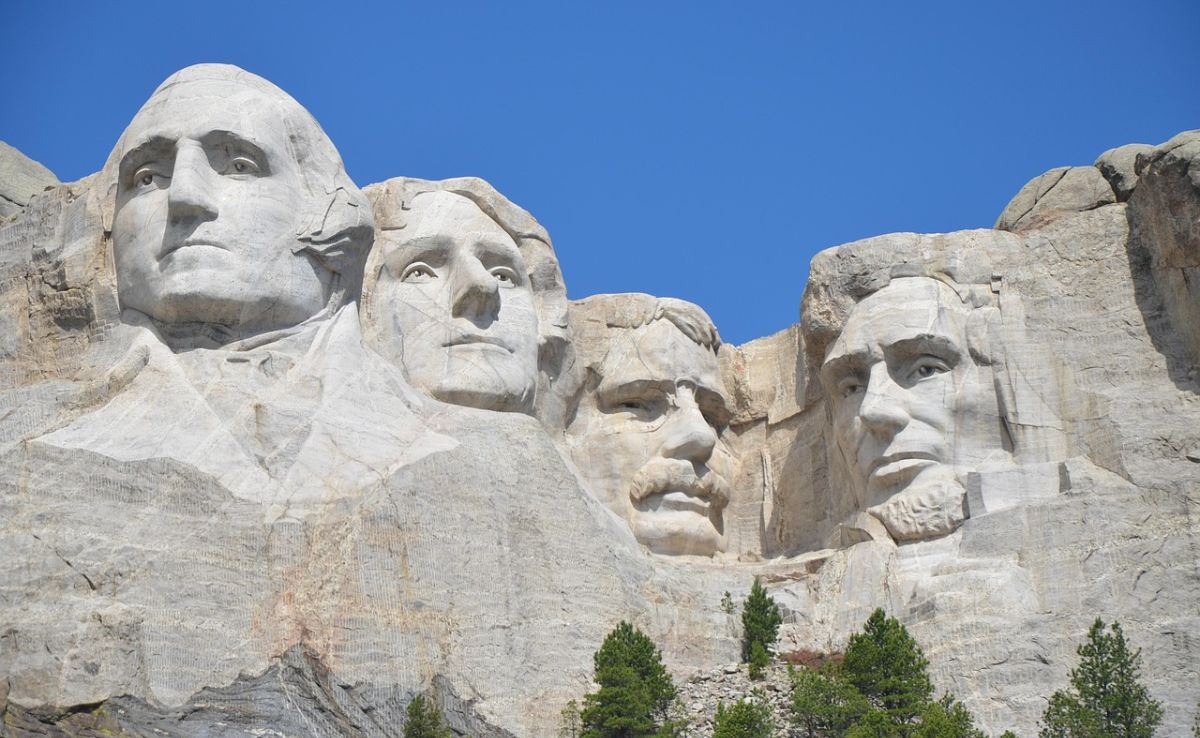
Mount Rushmore, carved into the granite face of South Dakota’s Black Hills, is one of the most iconic landmarks in the United States. Representing four influential American presidents, George Washington, Thomas Jefferson, Theodore Roosevelt and Abraham Lincoln, the sculpture stands as a symbol of leadership, democracy and national identity. Its creation is a story of vision, perseverance and artistic brilliance. Here are the top ten fascinating facts that highlight why Mount Rushmore remains a timeless monument admired across the world.
The Original Vision Was Much Bigger
Sculptor Gutzon Borglum originally envisioned the presidents carved from head to waist. He wanted a full depiction that showed more detail of their clothing and posture. Due to funding shortages, harsh weather and the sheer challenge of carving granite, the project was limited to just the 60-foot heads.
It Took 14 Years to Complete
Construction began in 1927 and continued until 1941. Although work stopped multiple times due to lack of funds and political hurdles, the dedication and hard labour of the workers ensured its completion. Borglum passed away in March 1941, and his son Lincoln Borglum supervised the final phase.
Over 400 Workers Helped Shape the Sculpture
Despite the dangerous conditions, no worker died during construction, a remarkable fact given the scale of the project. Workers used jackhammers, dynamite, chisels and rope harnesses while standing hundreds of feet above ground. Approximately 450,000 tons of rock were removed from the mountain.
The Faces Represent Key Eras of U.S. History
Each president was chosen for a symbolic reason:
- George Washington represents the birth of the nation.
- Thomas Jefferson stands for westward expansion and the Louisiana Purchase.
- Theodore Roosevelt symbolises industrial development and great reforms.
- Abraham Lincoln embodies the preservation of the Union during the Civil War.
Together, the four reflect the foundation, growth and strength of the United States.
The Location Was Not Random
The Black Hills region was selected for its stable granite and dramatic landscapes. However, the area has deep cultural significance for the Lakota Sioux, who regard the Black Hills as sacred. This has led to ongoing cultural and political debates surrounding the monument’s presence.
It Was Originally a Tourism Project
The idea for the monument was initially proposed by South Dakota historian Doane Robinson to boost tourism in the region. Borglum’s design made the attraction famous nationwide. Today, Mount Rushmore draws nearly three million visitors annually, contributing greatly to South Dakota’s economy.
An Unfinished “Hall of Records” Exists Behind Lincoln’s Head
Borglum dreamed of carving a grand vault behind the sculptures to store important documents and artifacts relating to American history. He wanted future generations to understand the monument’s meaning. Although the hall was never completed, a repository with historical records and a titanium vault plate was installed in 1998 as a symbolic gesture.
Weather Conditions Help Preserve the Monument Naturally
The granite of Mount Rushmore erodes very slowly, just about 1 inch every 10,000 years. This means the monument is likely to remain intact for thousands of years. Seasonal temperature changes and natural expansion or contraction of rock have been studied to ensure long-term preservation.
The Statue Was Almost Placed Elsewhere
Initially, Robinson suggested the Needles, a set of sharp granite spires in the Black Hills. But Borglum rejected the idea because the rock there was too weak for detailed carving. He chose Mount Rushmore for its broad, smooth-faced granite and better sunlight exposure.
It Continues to Be a Symbol of American Identity
Beyond its artistic achievement, Mount Rushmore serves as a reminder of leadership values, national unity and historical sacrifice. It has appeared in countless films, books, documentaries and political discussions. Despite controversies, it remains one of the most recognised landmarks of the United States.
Mount Rushmore is more than just a sculpture carved into stone; it is a testament to human determination, engineering brilliance and the immortal stories of four leaders who shaped a nation. For visitors, historians and lovers of monumental art, the mountain stands as a bridge between the past and the present, reminding us how history is etched not only on paper but also in stone.